
Google’s ranking system no longer rewards “keyword‑stuffed” pages; it rewards websites that deliver a fast, intuitive, and stable user experience (UX). In 2026, UX, Core Web Vitals, and SEO are tightly intertwined, making it critical for U.S. businesses to prioritize page experience, mobile‑first design, and technical performance alongside content and backlinks.
Why UX Matters For SEO In 2026
UX for SEO means designing your site so users can find information, complete tasks, and convert with minimal friction. A clear information architecture, fast loading, and mobile‑friendly navigation help reduce bounce rates and increase engagement—signals Google uses to assess ranking factors 2025–2026.
When pages load quickly, respond smoothly, and feel stable, users stay longer and are more likely to convert, which boosts SEO rankings as a secondary signal.
Core Web Vitals: What U.S. Businesses Need To Know
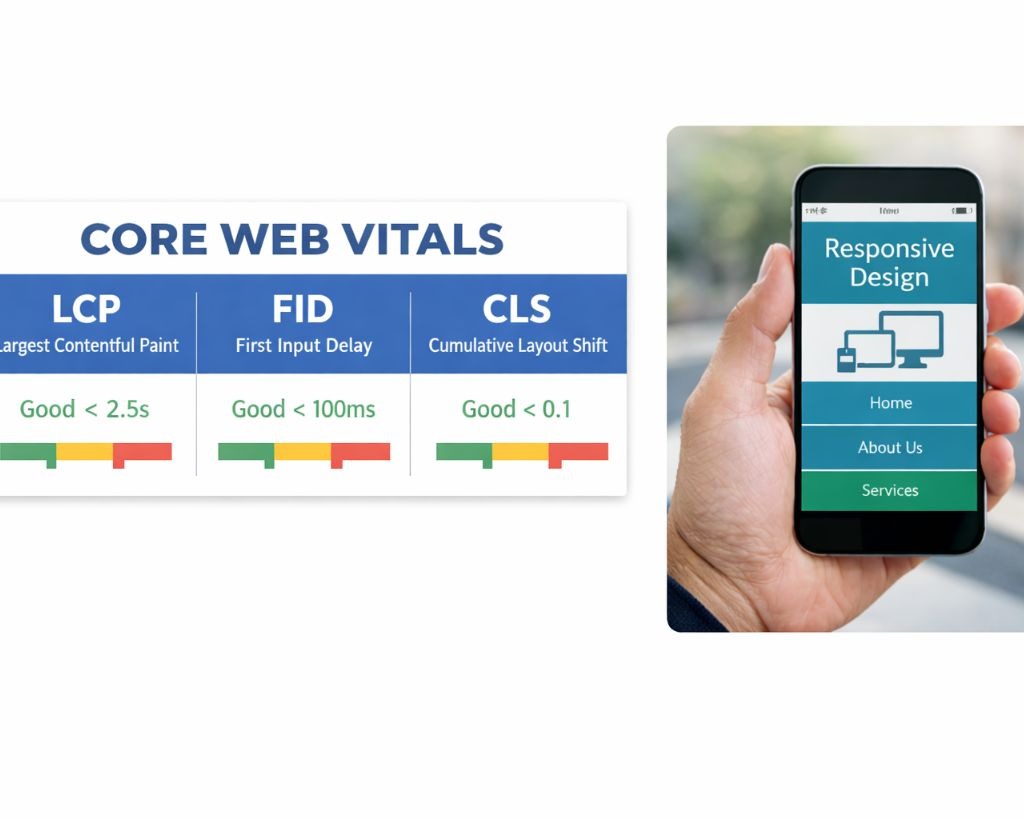
Google’s Core Web Vitals are a user‑centric performance metric set that measures loading (Largest Contentful Paint – LCP), interactivity (Interaction to Next Paint – INP), and visual stability (Cumulative Layout Shift – CLS).
Pages that consistently meet “good” thresholds in these metrics receive a page experience ranking boost, especially when competing pages have similar content quality, backlinks, and on‑page SEO.
How Core Web Vitals Impact Business Performance
For U.S. businesses, Core Web Vitals optimization isn’t just about rankings—it directly affects conversion rates, bounce rates, and revenue. Studies show that even a 1‑second delay in page load time can reduce conversions by up to 7%, while smoother interactions and stable layouts increase trust and session depth.
E‑commerce, SaaS, and local service sites that optimize LCP, INP, and CLS typically see improved engagement, fewer cart abandonments, and higher mobile retention.
UX, mobile‑first indexing, and responsive design
Mobile‑first indexing means Google primarily uses your mobile version to rank pages, so UX for SEO on mobile devices is non‑negotiable.
A responsive design that adapts to different screen sizes, touch‑friendly navigation, and fast mobile load times align with Core Web Vitals standards and help U.S. businesses capture the growing share of mobile traffic.
Technical SEO Tactics To Improve UX aAnd Core Web Vitals
Here are practical, SEO‑friendly steps U.S. businesses can take to align UX, Core Web Vitals, and SEO:
- Optimize Critical‑Rendering Paths by inlining above‑the‑fold CSS, deferring non‑essential JavaScript, and using lazy loading for images and videos.
- Reduce Server Response Time through caching, CDN usage, and database optimization so LCP scores stay within the “good” range.
- Minimize Layout Shifts by reserving space for images, ads, and embeds with fixed height/width, improving CLS and perceived stability.
- Break Long JavaScript Tasks into smaller chunks and optimize main‑thread work to reduce INP and keep pages responsive under load.
Aligning UX, Core Web Vitals, And SEO Strategy
To future‑proof a U.S. business site, treat UX, Core Web Vitals, and SEO as a unified strategy rather than isolated projects. Use Google Search Console and PageSpeed Insights to monitor Core Web Vitals, then prioritize fixes that also improve usability and conversion.
Testing changes with A/B tests or UX‑focused tools ensures that technical improvements don’t hurt the user journey—striking the right balance between speed, aesthetics, and functionality.
Image Suggestion For Engagement
Use a custom‑crafted hero image showing:
- A split screen with a fast, clean website on one side and a slow, janky layout on the other, with Core Web Vitals metrics (LCP, INP, CLS) highlighted.
- Subtle U.S. elements like city skylines or a laptop with a U.S. map to emphasize the U.S. business focus.
This type of visual reinforces UX, Core Web Vitals & SEO in a single, scroll‑stopping banner.
Contact Us For Best Seo Service In The Town!
FAQs About UX, Core Web Vitals & SEO
1. How Do Core Web Vitals Affect SEO Rankings?
Core Web Vitals are part of Google’s page experience signals, which help distinguish between otherwise similar pages. Sites with “good” LCP, INP, and CLS are more likely to rank higher and retain users, especially on mobile.
2. Are UX And Technical SEO The Same Thing?
UX and technical SEO overlap but are not identical. UX focuses on how users feel when navigating a site, while technical SEO ensures the site is crawlable, fast, and secure. Optimizing Core Web Vitals sits at the intersection of both.
3. Should Every U.S. Business Prioritize Core Web Vitals?
Yes. For U.S. businesses that rely on online visibility, e‑commerce, or local search, Core Web Vitals optimization improves rankings, reduces bounce rates, and increases conversions. Even small UX improvements can create a competitive edge in saturated markets.